
Uncovering the Drivers of Extreme Wildfire Plume Heights
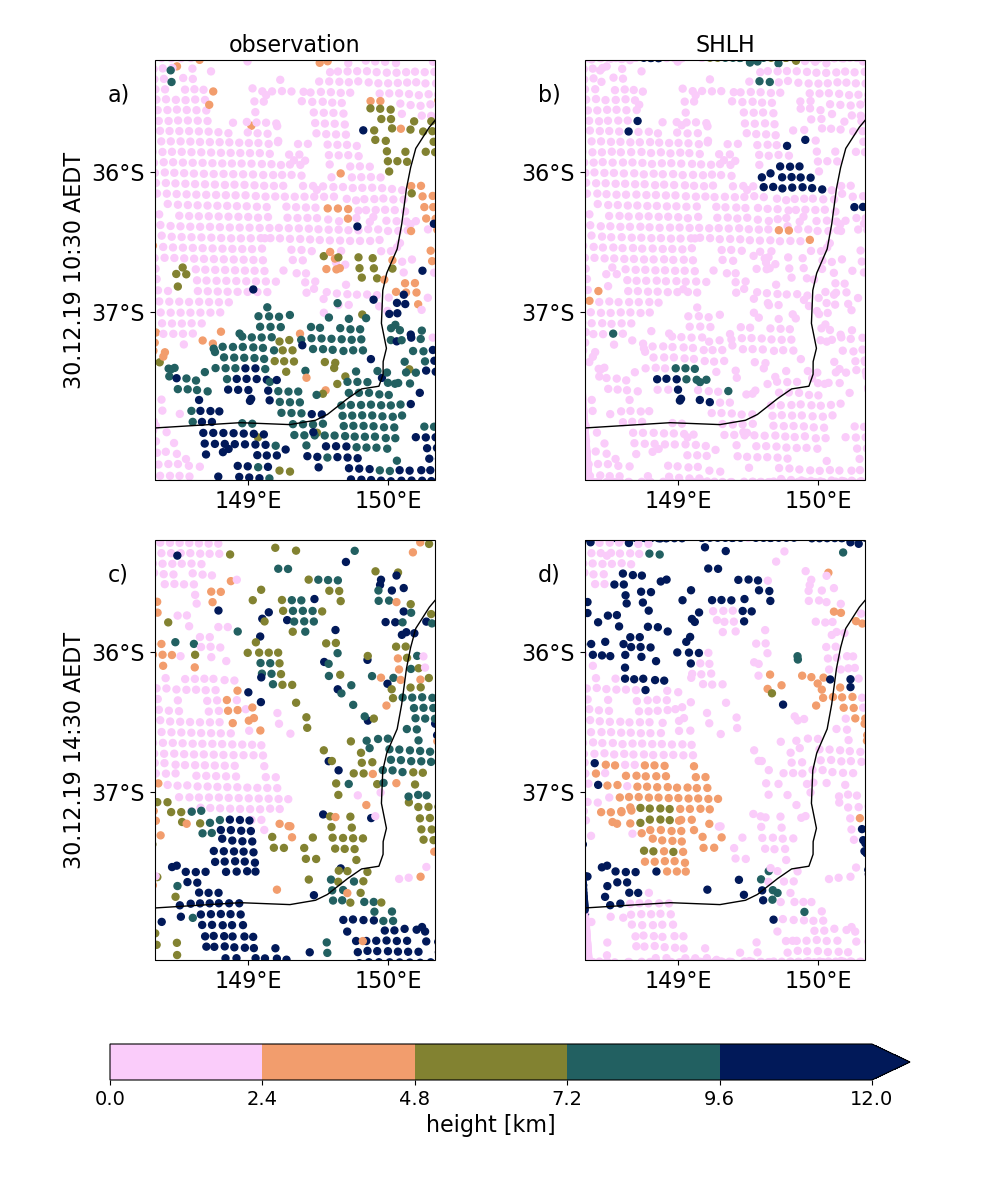
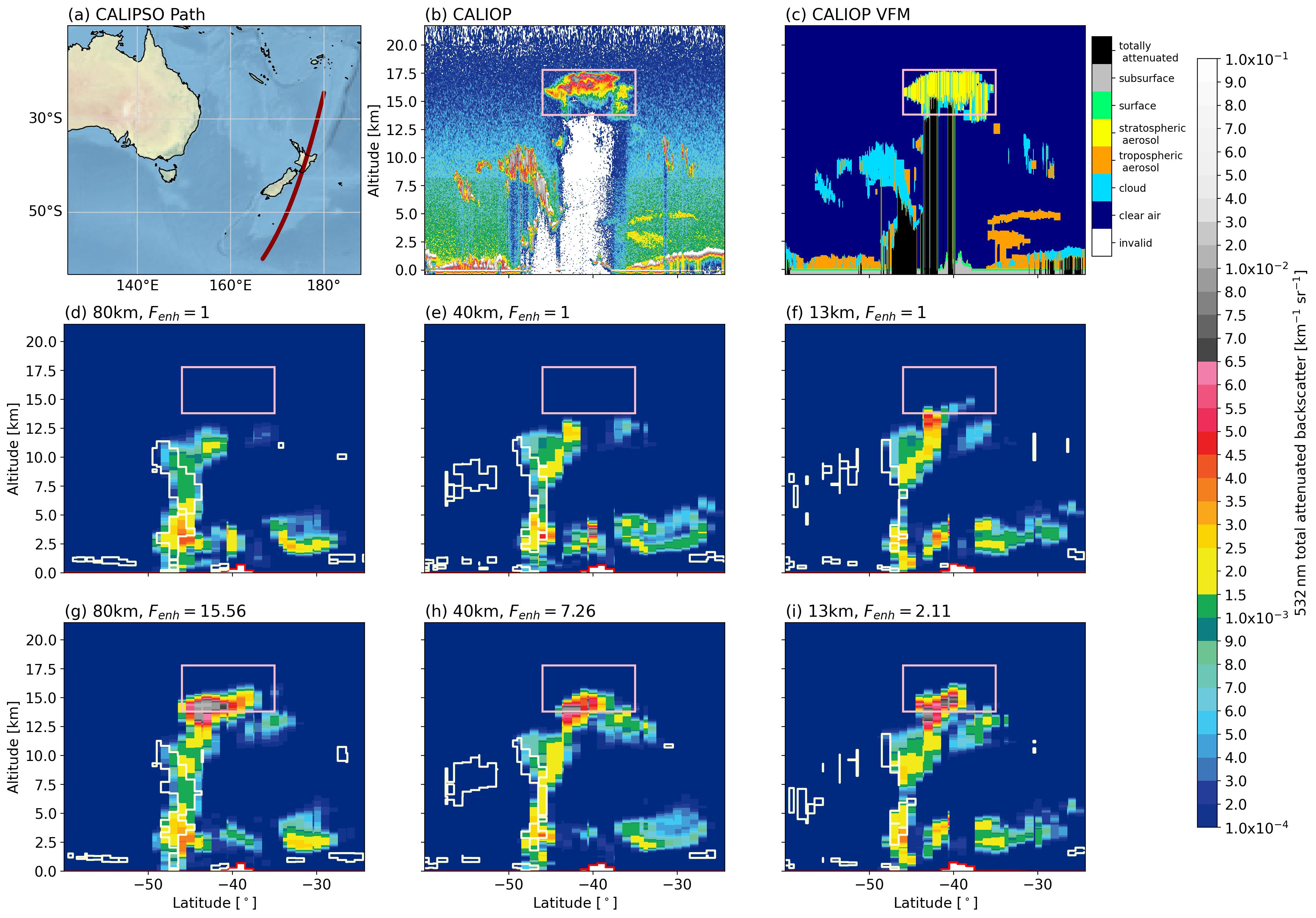
During Australia’s severe 2019/2020 bushfire season, smoke plumes reached altitudes of up to 16 km, penetrating the stratosphere, where they can persist for months and influence atmospheric chemistry and climate. These exceptional plume heights, observed during the intense Australian New Year (ANY) pyroconvective outbreak, challenged existing atmospheric models, which consistently underestimated such extreme injection heights.
In a series of studies (Muth et al., 2025, 2026; Unser et al., 2026), researchers at IMKTRO combined ICON-ART simulations with satellite observations to uncover the key mechanisms driving this vigorous plume rise. Focusing on the record-breaking ANY event, the studies identify a hierarchy of dominant processes and reveal a critical sensitivity in how models represent them.
1. Fire-generated sensible heat as the primary driver: The most influential factor is the direct release of sensible heat from the fire. Using Fire Radiative Power (FRP) observations, the researchers developed a parameterization that translates FRP into an additional surface heat flux within the model. This energy strongly destabilizes the local atmosphere, producing powerful buoyant updrafts that trigger pyrocumulonimbus (pyroCb) development and act as an elevator lifting the smoke plume to high altitudes.
2. Moisture and pyroCb development: Moisture released during combustion provides an additional contribution by intensifying latent heat release within the developing pyro-convective clouds, thereby supporting the vertical transport of aerosol mass.
3. Aerosol-radiative feedback: Once the smoke is injected, a secondary process further boosts the plume’s rise: aerosol-radiative feedback, also known as self-lofting. Sunlight-absorbing smoke particles heat the surrounding air, enhancing buoyancy and causing the plume to rise even higher as it travels. This mechanism is essential for explaining the sustained, high-altitude transport observed in the ANY event.
4. The crucial influence of model resolution: A key finding across the studies is the strong dependence of simulated plume height on model resolution. At coarse horizontal resolutions, peak fire intensity is smoothed out by the grid, leading to notable underestimation of plume height. To address this, the team introduced a resolution-dependent scaling method for the sensible heat flux. This enhancement factor effectively compensates for the loss of peak intensity at coarser scales, improving consistency across simulations and aligning model output more closely with satellite observations.
These insights substantially advance the physical representation of extreme wildfire plumes in atmospheric models. Accurate prediction of plume rise is essential for simulating long-range smoke transport and assessing its impacts on air quality, weather, and climate.
References
Muth, L. J. et al. (2025): The dominant role of sensible heat release in driving pyro-convective cloud dynamics during extreme wildfires. ACP, 25, 16027–16040. https://doi.org/10.5194/acp-25-16027-2025
Muth, L. J. et al. (2026): Integrating fire-induced heat and aerosol feedback into plume rise models for extreme wildfires. ACP, 26 (12), 8505–8528. doi:10.5194/acp-26-8505-2026
Unser, T., et al. (2026). Capturing Extreme Wildfire Plume Heights: The Role of Sensible Heat Release and Model Resolution for the 2019/2020 Australian New Year Event. JGR Atmosphere.
https://doi.org/10.1029/2025JD046190