
Galerie
Student Field Trip 2026
From 28 September to 2 October 2026, the master's degree program "Meteorology and Climate Physics" at KIT, accompanied by Prof. Michael Kunz and Dr. Susanna Mohr, went on a multi-day field trip to southern Germany and Switzerland. The itinerary took the students to leading research institutions, government agencies, and companies in the field of meteorology, giving them a sense of the wide range of career paths the discipline offers.
Climate change in a National Park ecosystem
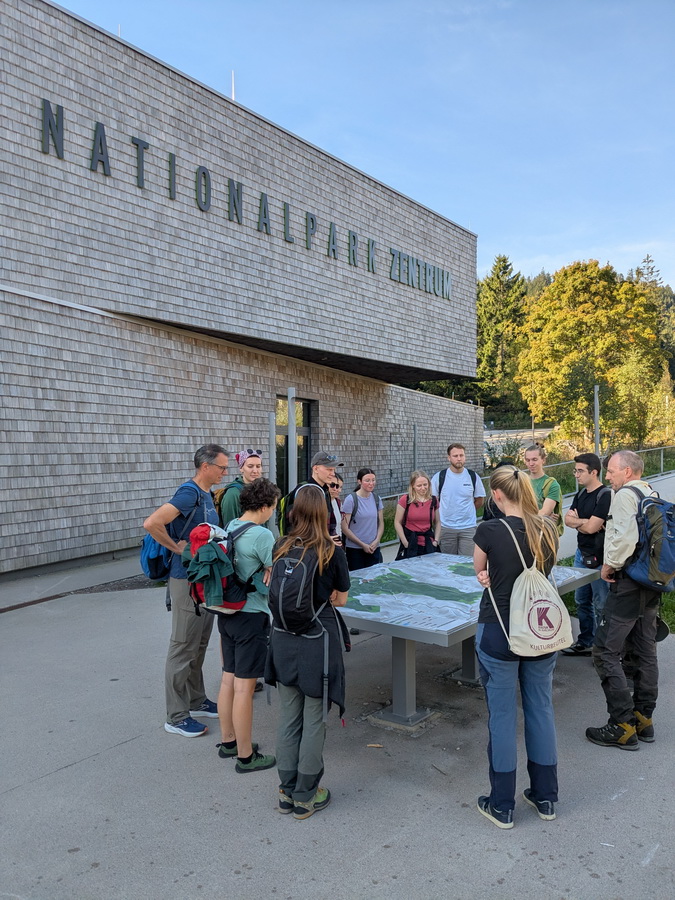
The trip began at the Black Forest National Park. During a guided tour and hike through the area around Ruhestein, Dr. Christoph Dreiser, deputy head of the "Environmental Monitoring and Geodata Management" unit, explained how climate change is transforming the forests of the Black Forest and how long-term ecosystem monitoring serves as the scientific basis for conservation strategies. A central theme of the tour was the park's role as an extensive natural laboratory. Since its founding in 2014, data has been collected on vegetation, soils, water, and wildlife, showing how a forest develops without any forestry interventions under changing climate conditions.
From the national weather service to university research: A day in Zurich
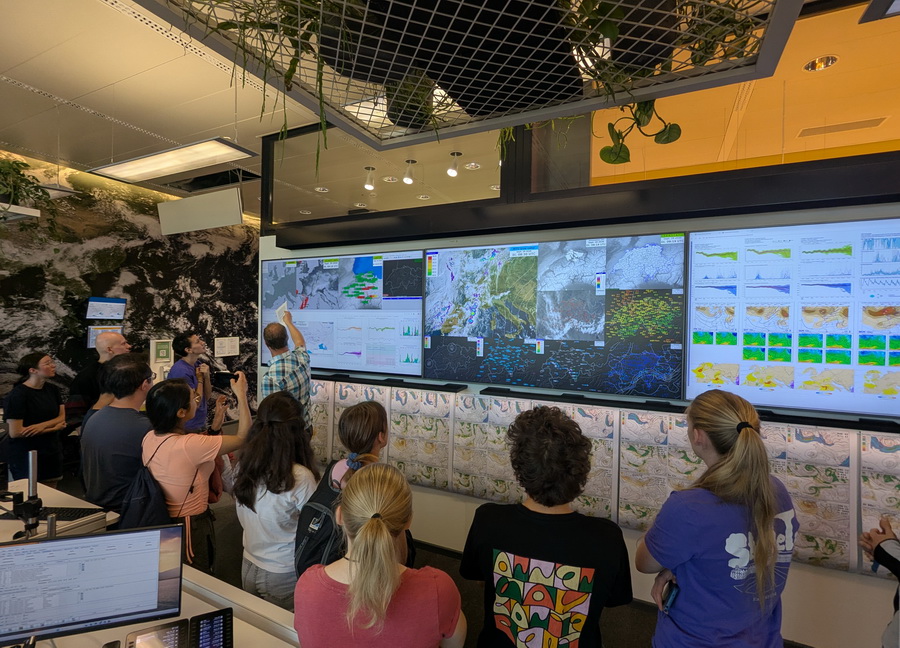
The next day's destination was Zurich. At the Federal Office of Meteorology and Climatology (MeteoSwiss) at Zurich Airport, the students first received an overview of the responsibilities of the national weather service. A subsequent tour of the forecasting center offered an up-close look at the day-to-day work of the meteorologists, who operate around the clock to produce weather forecasts, issue severe weather warnings to authorities and the public, and provide aviation weather services for Zurich Airport.
Next, the students visited the Department of Environmental Systems Science (D-USYS) at ETH Zurich. After PhD students from the climate physics research groups introduced the individual institutes, three researchers gave insights into their fields of work: Prof. Heini Wernli explained atmospheric dynamics using heat waves and warm conveyor belts as examples. Prof. David Bresch presented the research of the weather and climate risk group on the risk concept and on the evaluation of adaptation measures. Dr. Cyril Brunner concluded the visit with topics on climate change mitigation and science communication, before the group toured the "KEEP IT CO₂OL" exhibition at FocusTerra as an example of successful science communication.
Ecosystem research at KIT Campus Alpin
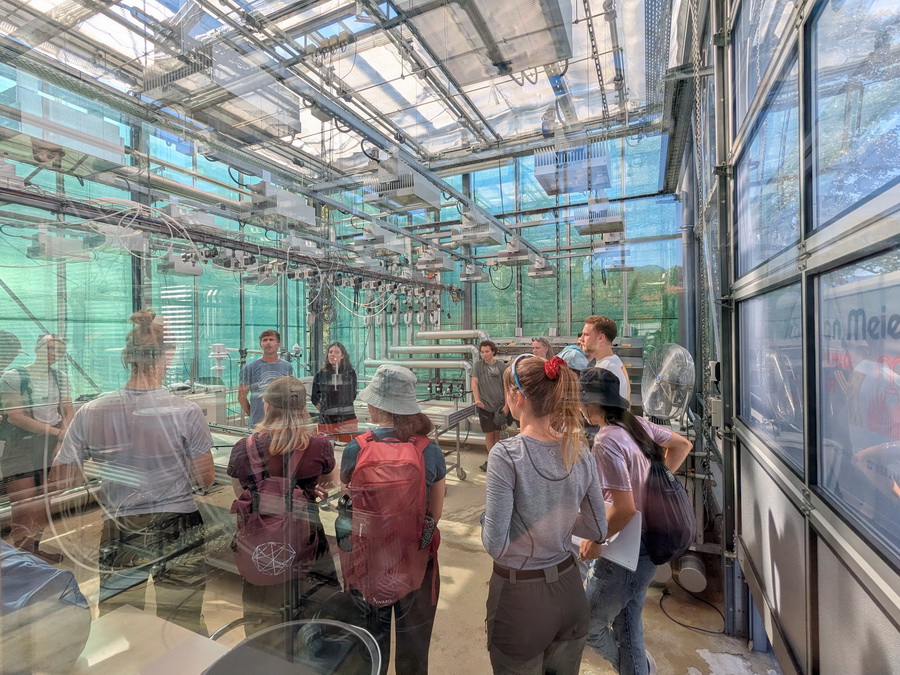
On the third day, the group traveled to KIT Campus Alpin in Garmisch-Partenkirchen, home of the Institute of Meteorology and Climate Research – Atmospheric Environmental Research (IMKIFU). The institute studies the interactions between the atmosphere, the biosphere, and society in urban and mountain environments. Its research priorities include, among other things, the exchange of trace gases and greenhouse gases between vegetation, soils, and the atmosphere; the effects of climate change and air pollutants on ecosystems; and atmospheric remote sensing. The participants also visited the institute's greenhouse, where trees are studied under controlled environmental conditions, such as simulated drought stress, in order to experimentally capture their responses to climate change. A hike through the Höllental Gorge (Höllentalklamm) to the Höllentalangerhütte rounded off the day, which gave them a vivid sense of the Wetterstein range's landscape and glacial history.
Between atmospheric research and dead ice: The Zugspitze as a research site
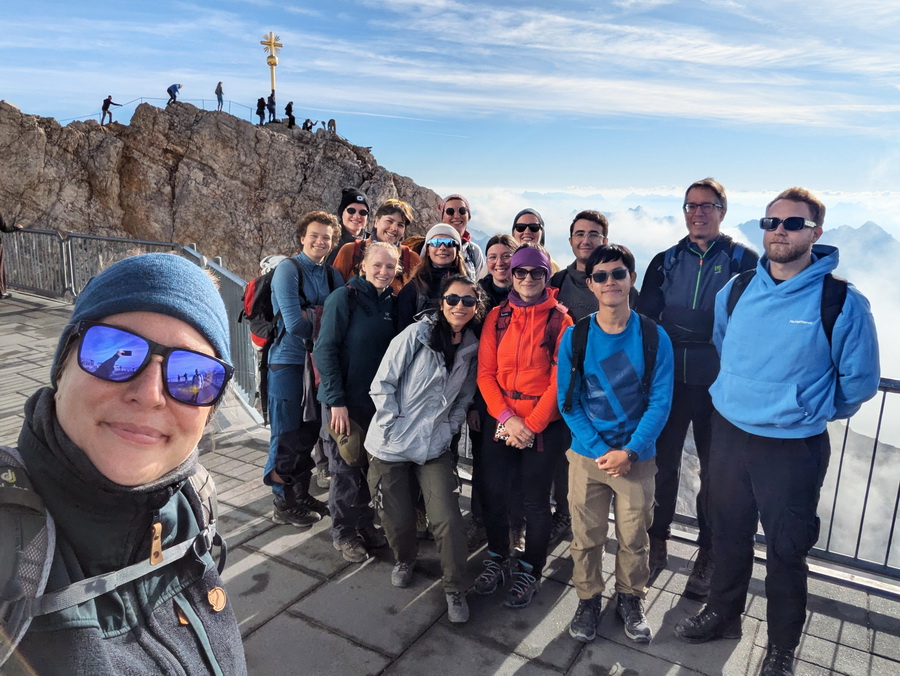
One highlight of the excursion was the visit on the fourth day to the Zugspitze, including the Schneefernerhaus environmental research station on the Zugspitzplatt. As Germany's highest-altitude research station, located just below the summit at around 2,650 m, it is used to measure aerosols and trace gases, as well as to observe cloud processes under conditions that cannot be replicated at lower elevations. Several research institutions share the station, including KIT. This allows them to study processes in the free atmosphere, such as the long-range transport of air pollutants or the radiation budget, directly on site, which makes it a key location for climate research and long-term atmospheric monitoring.
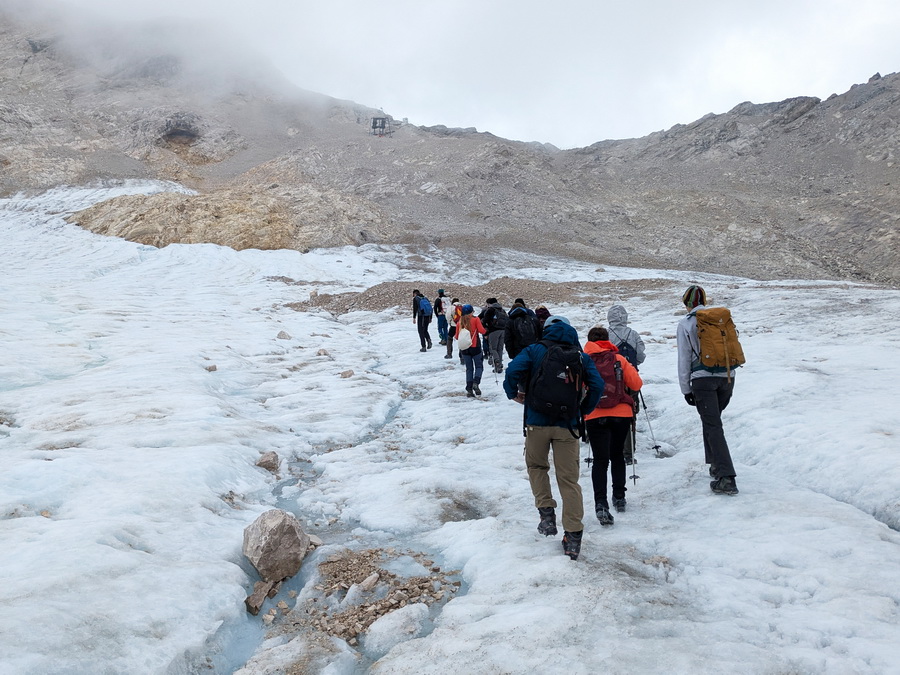
During a subsequent glacier and climate excursion on the Zugspitzplatt, the students saw firsthand how the Alpine glaciers are retreating. Although the Northern Schneeferner is one of the last remaining glaciers in Germany, it has shrunk dramatically, to the point that the students walked across large areas that can best be described as dead ice.
From risk modeling to spaceflight
On the final day, the program bridged the gap between research and practice. During a visit to Allianz in Munich, the students learned how meteorological expertise is applied in assessing weather and climate risks in the insurance industry. The focus was on risk modeling: catastrophe models (CAT-models) combine hazard analyses (e.g., of storm, hail, or flood events) with data on exposure and vulnerability. Based on this information, losses can be quantified probabilistically, which informs insurance premiums and reinsurance strategies.
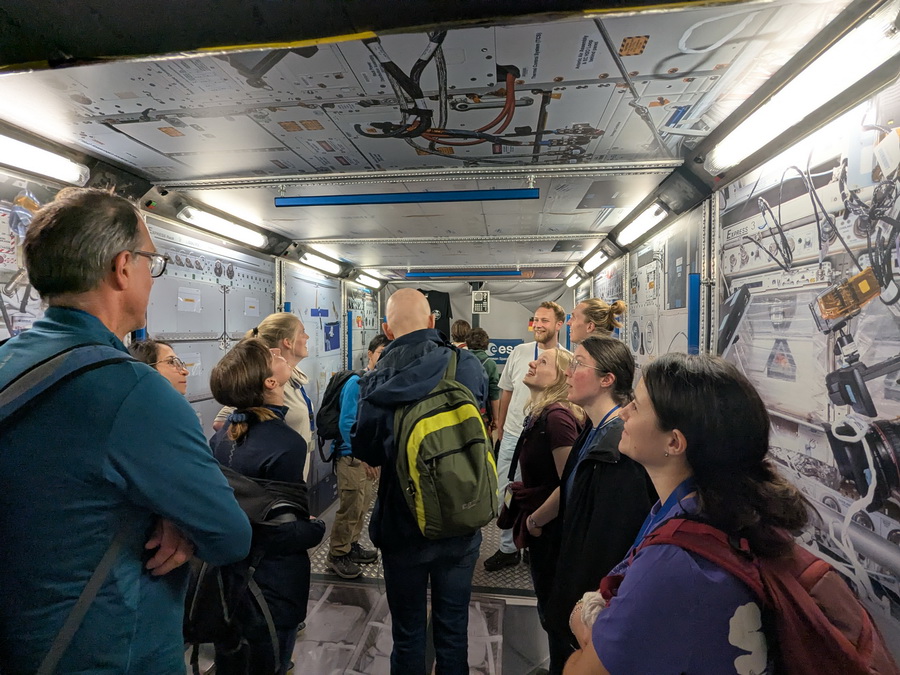
Next, the German Aerospace Center (DLR) in Oberpfaffenhofen offered insights into research flight operations and atmospheric remote sensing. Dr. Marc Puskeiler, a former meteorology and PhD student at KIT who is now a pilot in the DLR research fleet, explained how scientific flight missions are planned and carried out using the DLR's research aircraft, especially the HALO (High Altitude and Long Range Research Aircraft). He walked through the individual steps, from mission planning to flying precise measurement profiles and the close coordination between the cockpit and the research team on board. The week concluded with a visit to the German Space Operations Center (GSOC).
A wide range of career opportunities
The route was deliberately designed to be diverse: it showed the aspiring meteorologists – both in terms of subject matter and potential employers – just how varied the professional fields in the discipline are: from basic research at universities and non-university research institutes, to public institutions such as the national weather service or nature conservation agencies, to the private sector, for example insurance companies. The varied program was very well received by the participants, as it helped them position their own professional profile and discover new career fields – and, of course, they also came away with plenty of new and exciting information about the broad field of meteorology and climate research.